
Aerogels and the engineering limits of empty space
Source: interestingengineering
Author: Georgina Jedikovska
Published: 1/30/2026
To read the full content, please visit the original article.
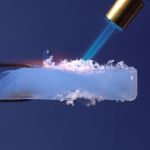
Read original articleAerogels are an advanced class of ultralight materials composed of up to 99.8% air, making them some of the lightest solids known. Silica-based aerogels are common, while graphene aerogels can be even lighter than air, with densities as low as 0.16 kg/m³. Despite their extreme lightness and porous, semi-transparent appearance—earning nicknames like “frozen smoke” or “solid clouds”—aerogels exhibit notable mechanical resilience and can absorb large amounts of substances, such as oil. First developed in 1931 by Samuel Kistler, aerogels have since been applied in diverse fields including space exploration, construction, energy systems, and industrial insulation, influencing modern engineering approaches to lightweight, high-performance materials.
The production of aerogels involves replacing the liquid in a gel with gas while preserving the solid framework. Starting from a gel precursor, chemical reactions form a semi-solid gel with liquid-filled pores on the nanoscale
Tags
materialsaerogelsadvanced-materialslightweight-materialsinsulationnanomaterialsgraphene-aerogels