
China's solar cell hits 27.2% efficiency, endures 1,000 hours at 185°F
Source: interestingengineering
Author: @IntEngineering
Published: 11/15/2025
To read the full content, please visit the original article.
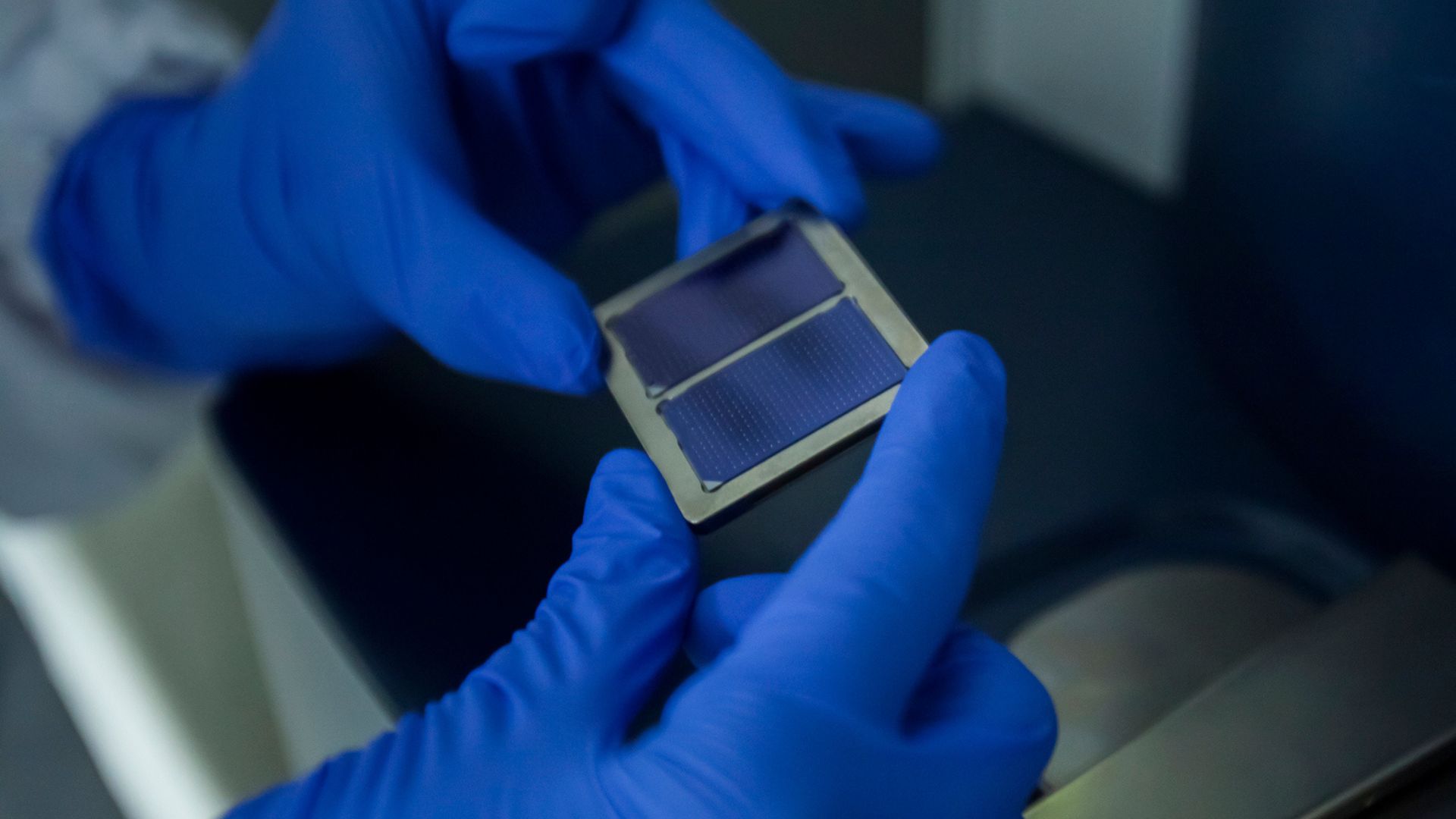
Read original articleResearchers at the Institute of Semiconductors, Chinese Academy of Sciences, have developed a perovskite solar cell prototype achieving a certified photoconversion efficiency of 27.2%, measured on a 0.108 cm² device. This advancement addresses a critical stability issue caused by uneven chloride ion distribution during film fabrication, which previously led to surface defects and reduced performance. By introducing potassium binoxalate, an alkali metal oxalate, during thermal processing, the team was able to suppress chloride ion migration. The potassium ions released bind with chloride ions, ensuring uniform chlorine distribution throughout the perovskite layer, resulting in improved efficiency and durability.
The new solar cells demonstrated notable operational stability, retaining 86.3% of their initial efficiency after 1,529 hours under continuous 1 Sun illumination at maximum power point tracking. In accelerated aging tests at 185°F (85°C), the cells maintained 82.8% efficiency after 1,000 hours, highlighting enhanced
Tags
energysolar-cellsperovskitephotoconversion-efficiencymaterials-sciencethermal-stabilitypotassium-binoxalate