
Chinese model helps humanoid robots adapt to tasks without training
Source: interestingengineering
Author: @IntEngineering
Published: 11/29/2025
To read the full content, please visit the original article.
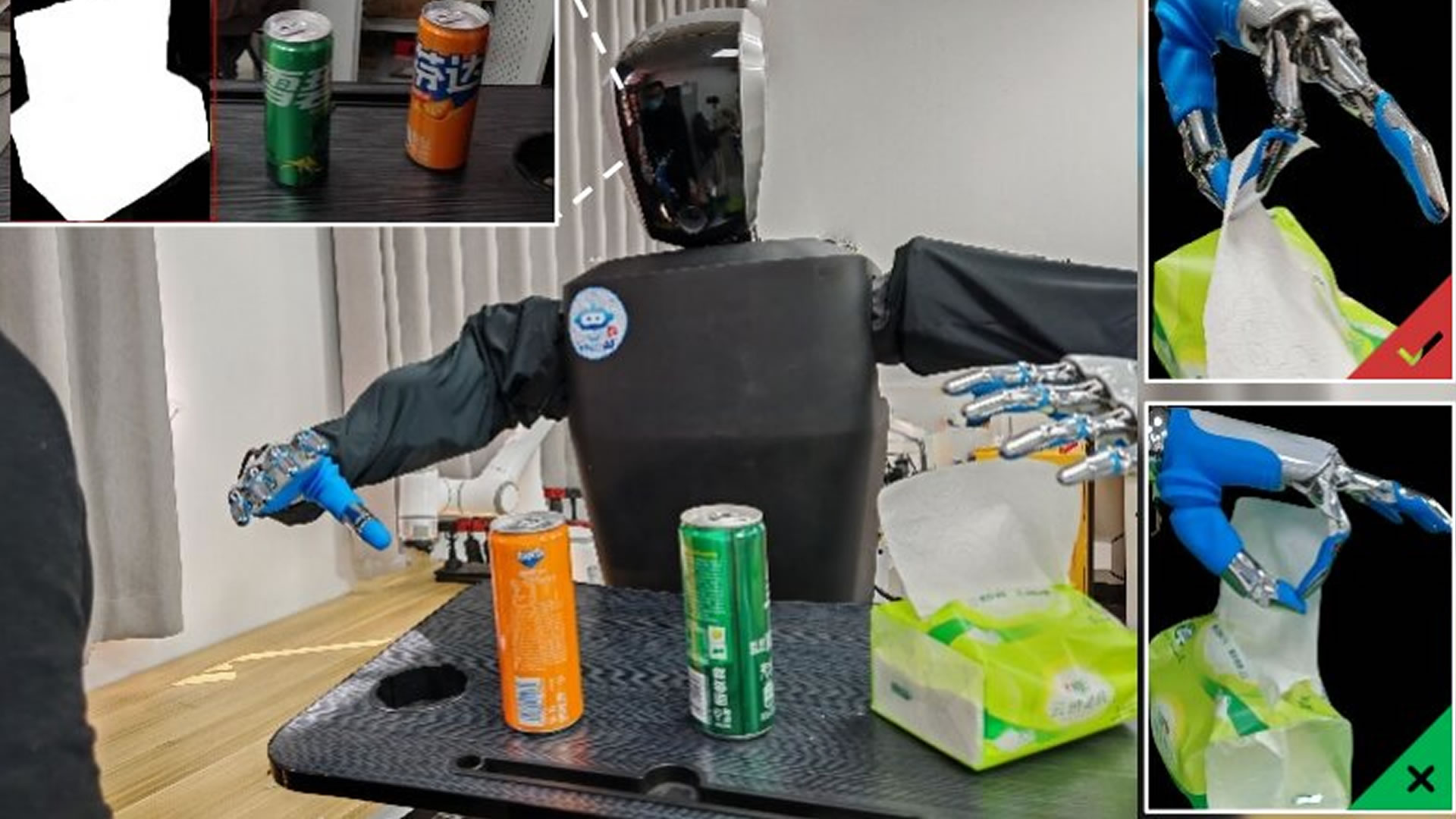
Read original articleResearchers from Wuhan University have developed a novel framework called the recurrent geometric-prior multimodal policy (RGMP) to enhance humanoid robots' ability to manipulate objects with human-like adaptability and minimal training. Current humanoid robots excel at specific tasks but struggle to generalize when objects change shape, lighting varies, or when encountering tasks they were not explicitly trained for. RGMP addresses these limitations by incorporating two key components: the Geometric-Prior Skill Selector (GSS), which helps the robot analyze an object's shape, size, and orientation to select the appropriate skill, and the Adaptive Recursive Gaussian Network (ARGN), which models spatial relationships and predicts movements efficiently with far fewer training examples than traditional deep learning methods.
Testing showed that robots using RGMP achieved an 87% success rate on novel tasks without prior experience, demonstrating a significant improvement over existing diffusion-policy-based models, with about five times greater data efficiency. This advancement could enable humanoid robots to perform a wider range of tasks in dynamic environments such
Tags
roboticshumanoid-robotsrobot-learningdata-efficient-roboticsrobotic-manipulationAI-in-roboticsrobotic-skill-adaptation