
Deutschlands Wasserstoff-Backbone und der lange Schatten des russischen Gases - CleanTechnica
Source: cleantechnica
Author: @cleantechnica
Published: 2/1/2026
To read the full content, please visit the original article.
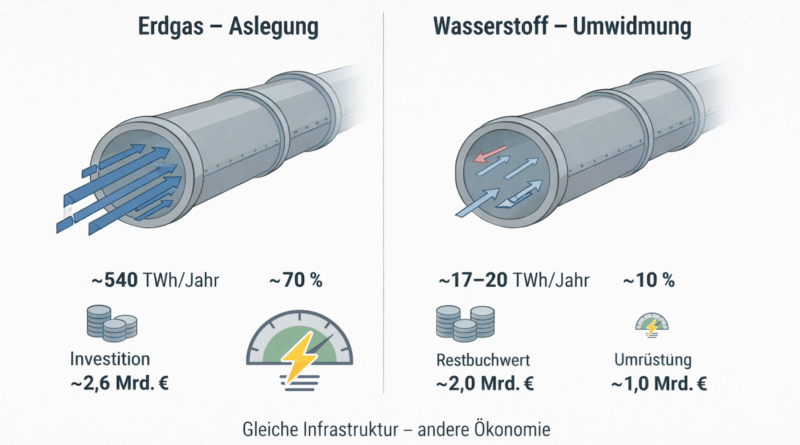
Read original articleThe article analyzes a recently repurposed 400-kilometer pipeline section in Germany, originally built for Russian natural gas transport, now designated as part of the country’s hydrogen backbone. Despite being framed as a forward-looking investment in a hydrogen economy, the pipeline’s physical characteristics—such as its 1.4-meter diameter and capacity of about 55 billion cubic meters per year—align closely with those of the EUGAL pipeline corridor, a major gas infrastructure commissioned in 2020 to transport Nord Stream gas southward through Germany. This suggests that the hydrogen backbone is essentially a continuation of Germany’s former gas strategy rather than a new greenfield project. The pipeline infrastructure is still largely financed under gas network regulations, with an estimated residual book value of around 2 billion euros, reflecting long depreciation periods of 45 to 65 years.
The article further situates this infrastructure within Germany’s broader political and economic context, highlighting decades of reliance on Russian pipeline gas to ensure industrial competitiveness, price stability
Tags
energyhydrogen-economypipeline-infrastructurenatural-gasenergy-transitionGermany-energy-policyhydrogen-backbone