
How can robots acquire skills through interactions with the physical world? An interview with Jiaheng Hu - Robohub
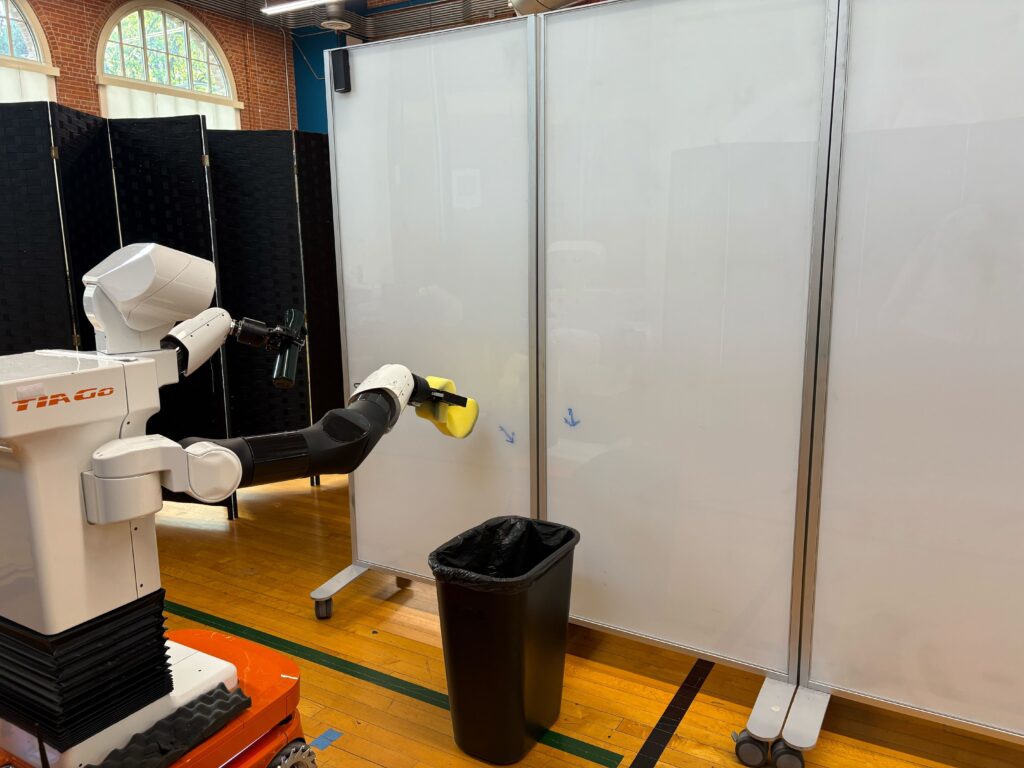
Source: robohub
Published: 2/12/2026
To read the full content, please visit the original article.
Read original articleThe article features an interview with Jiaheng Hu discussing their research on enabling robots, particularly household mobile manipulators, to autonomously acquire skills through real-world reinforcement learning (RL). Traditional RL approaches in robotics often rely on training policies entirely in high-fidelity simulations before deploying them in the real world (zero-shot sim2real). However, this approach faces significant challenges: creating accurate, task-specific simulators is time-consuming and some tasks involving complex interactions (e.g., pouring water, folding clothes) are difficult to simulate realistically. Real-world RL, where robots learn directly through physical interaction, offers a promising alternative but is hindered by sample inefficiency and safety risks during exploration.
To address these challenges, Hu and colleagues developed SLAC (Simulation-Pretrained Latent Action Space for Whole-Body Real-World RL), a two-step method that leverages low-fidelity simulation to facilitate safer and more efficient real-world learning. First, SLAC uses unsupervised RL in simulation to learn a
Tags
roboticsreinforcement-learningreal-world-learningmobile-manipulatorsrobot-controlautonomous-robotsskill-acquisition