
How Iowa State Lab helps humanoid robots master balance and safety
Source: interestingengineering
Author: @IntEngineering
Published: 11/5/2025
To read the full content, please visit the original article.
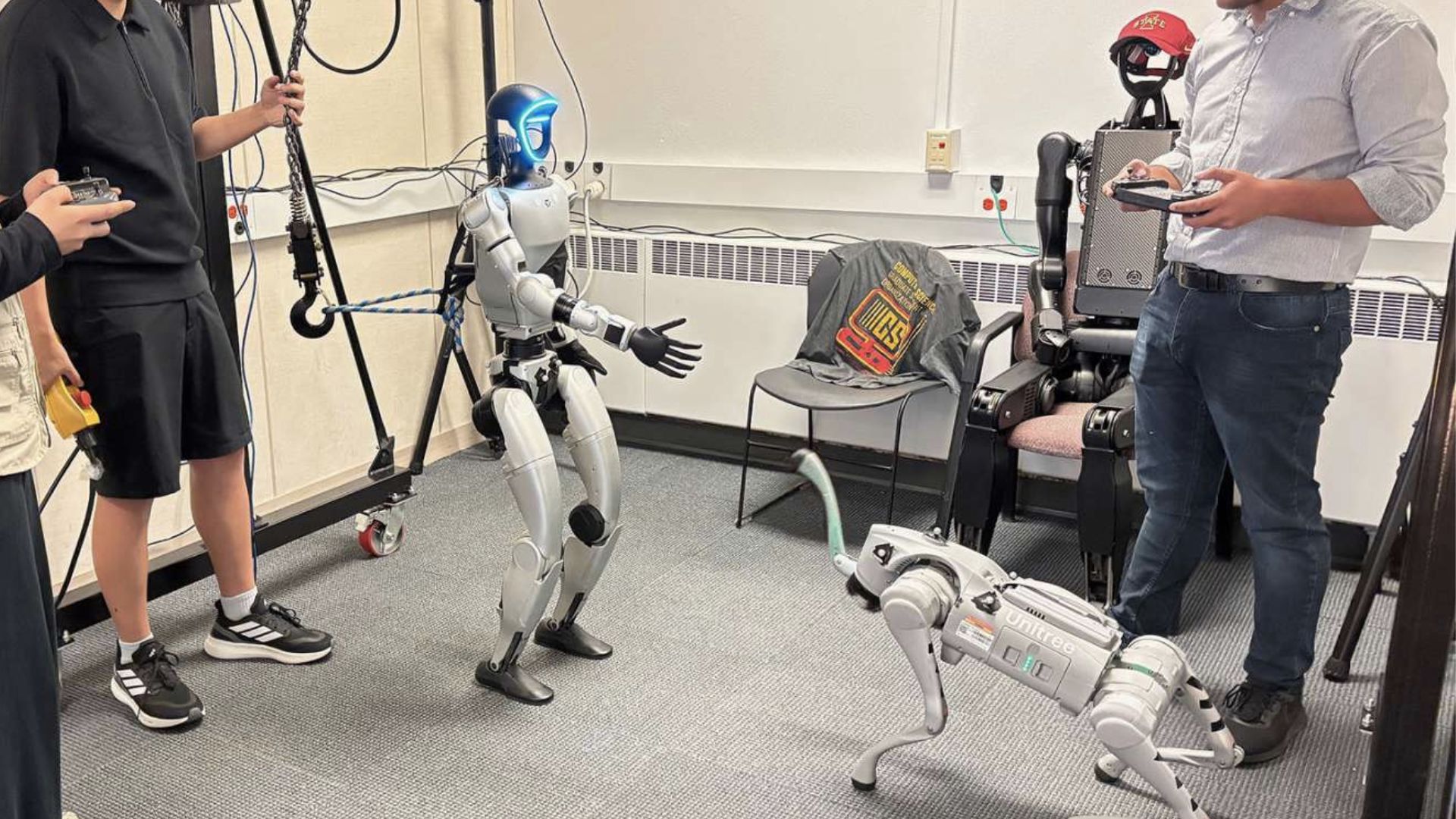
Read original articleEngineers at Iowa State University are advancing humanoid robots' physical intelligence, focusing on mastering self-balancing and precise execution of complex tasks such as walking, grasping, and navigation. These capabilities are essential for robots to function effectively in real-world human environments. Bowen Weng, an assistant professor and roboticist at Iowa State, emphasizes that physical intelligence—automatic in humans—is a remarkable skill that robots must develop to operate smoothly and safely alongside people. Humanoid robots, designed with human-like forms, aim to assist in various roles including research, hazardous jobs, and everyday tasks, while addressing societal concerns about automation and human-robot interaction.
Weng co-authored two significant studies contributing to this field. The first evaluates the stability and performance of commercial quadruped robots, Ghost Robotics Vision 60 and Boston Dynamics Spot, under dynamic naval conditions, finding that Vision 60 exhibits superior balance and lower torque demands. The second study focuses on the importance of repeatable and reliable risk assessment protocols for robot
Tags
roboticshumanoid-robotsrobot-balancephysical-intelligenceautomationrobot-stabilityrobot-safety