
Hydrogen at Sea Just Got Even More Expensive: What DNV’s Safety Findings Mean - CleanTechnica
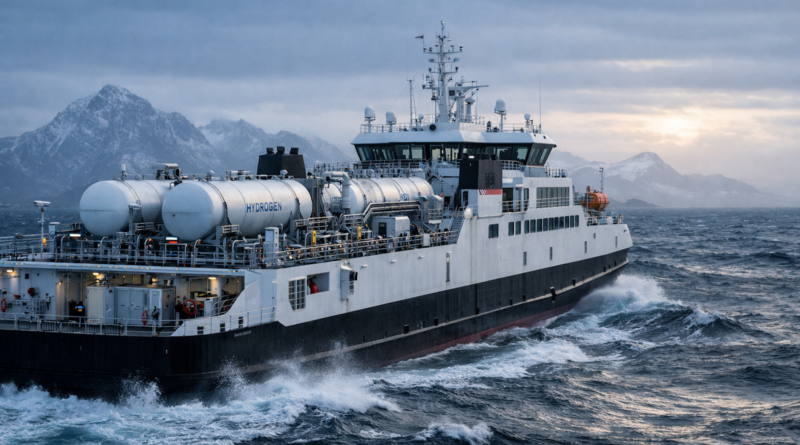
Source: cleantechnica
Author: @cleantechnica
Published: 3/18/2026
To read the full content, please visit the original article.
Read original articleThe article discusses recent safety findings by DNV regarding hydrogen as a marine fuel and their implications for the cost and engineering challenges of hydrogen-powered ships. DNV emphasizes that hydrogen requires a more stringent, design-based safety regime than LNG, alcohol fuels, or batteries, involving multiple layers of containment, detection, and operational controls. These safety measures are not merely regulatory details but represent significant capital and operational costs embedded in ship design, maintenance, and procedures. The European Maritime Safety Agency’s (EMSA) guidance, while non-mandatory, recommends secondary enclosures for all hydrogen leak sources, signaling a conservative approach that moves beyond relying on buoyancy and open-air dispersion alone. This shift increases the baseline cost of hydrogen fuel systems in maritime applications.
The engineering challenges stem from hydrogen’s unique properties: it leaks easily, ignites with minimal energy, and can rapidly form explosive concentrations, making incidents escalate faster than detection and response can manage. Consequently, passive and automatic safety protections are necessary, which add complexity and
Tags
energyhydrogen-fuelmaritime-safetyDNVship-designdecarbonizationfuel-technology