
Hyperloop’s future turns on one quiet engineering problem
Source: interestingengineering
Author: Georgina Jedikovska
Published: 12/3/2025
To read the full content, please visit the original article.
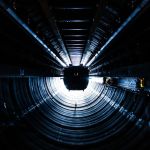
Read original articleThe hyperloop, a concept for ultra-fast, near-silent travel through low-pressure tubes, traces its origins back to 1799 with George Medhurst's early pneumatic transport ideas. Revived in 2013 by Elon Musk, the hyperloop aims to offer speeds up to 760 mph by using magnetic levitation or air bearings to lift passenger pods inside sealed, low-pressure tubes, drastically reducing air resistance. This technology promises rapid journeys—such as San Francisco to Los Angeles in 35 minutes—while being more energy-efficient and environmentally friendly than traditional transport and air travel, with fewer delays and no airport congestion.
Despite early enthusiasm and the formation of startups like Hardt Hyperloop, progress has slowed due to significant engineering challenges. These include integrating vacuum systems, magnetic levitation, emergency protocols, and scalable lane-switching for networkability. According to Hardt Hyperloop co-founder Tim Houter, resolving these issues is critical for moving beyond test tracks to full-scale networks. Public acceptance also remains
Tags
energytransportation-technologymagnetic-levitationelectric-propulsionsustainable-travelhigh-speed-transitvacuum-tube-technology