
New 26% efficient solar cells can work in extreme space conditions
Source: interestingengineering
Author: @IntEngineering
Published: 3/20/2026
To read the full content, please visit the original article.
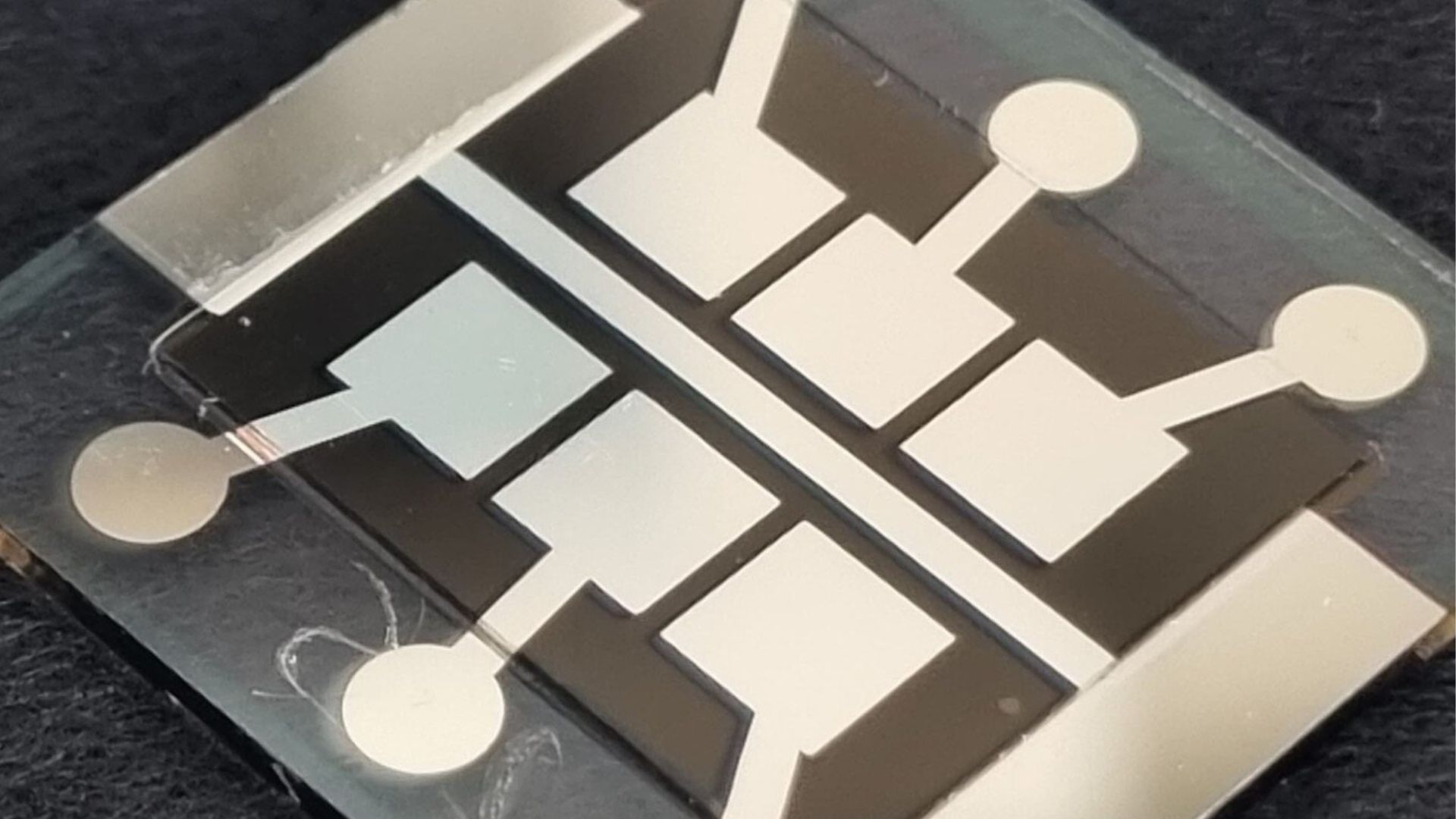
Read original articleResearchers at Ludwig Maximilian University of Munich have developed a new method to enhance the durability and efficiency of perovskite solar cells for use in extreme space conditions. These solar cells face significant challenges in Low Earth Orbit (LEO) due to rapid temperature fluctuations between -80°C and +80°C, which cause mechanical stress, cracking, and layer delamination, leading to power loss. The team, led by Dr. Erkan Aydin, introduced a dual-reinforcement strategy using molecular "glue" to stabilize both the internal grain structure and the interface between the solar cell and its substrate. This involves infusing the perovskite layer with alpha-lipoic acid to form a polymer network that prevents internal cracking, and applying a molecule called DMSLA to chemically anchor the perovskite to the electrode.
This innovative approach resulted in perovskite solar cells achieving 26% efficiency while retaining 84% of their original power after 16 thermal cycles between -
Tags
solar-cellsperovskiteenergyspace-technologythermal-fatiguematerials-sciencerenewable-energy