
New 'optical cavity' can make million-qubit quantum computer network
Source: interestingengineering
Author: @IntEngineering
Published: 1/28/2026
To read the full content, please visit the original article.
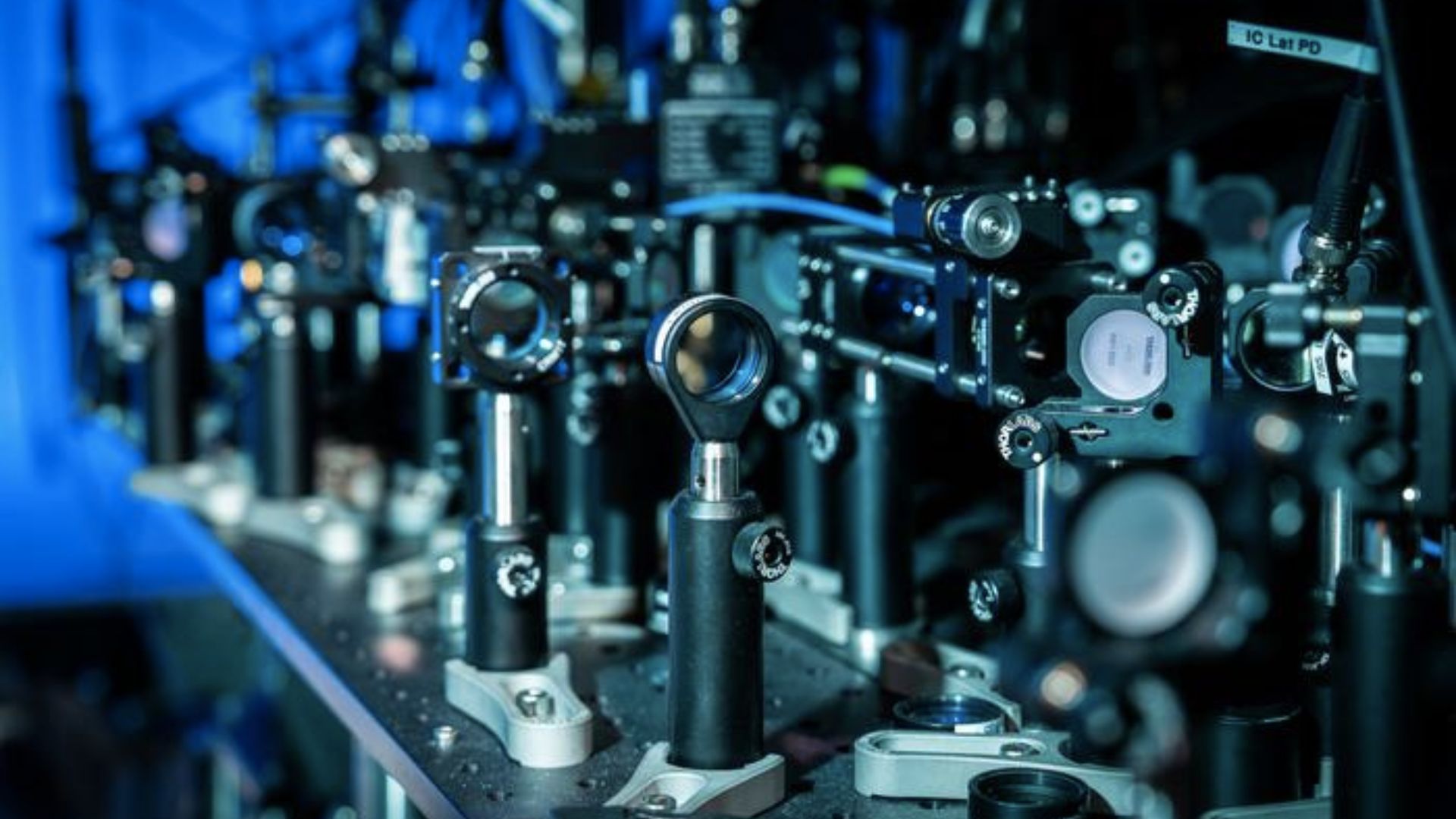
Read original articleScientists at Stanford University have developed a novel "optical cavity" technology that efficiently collects single photons emitted by individual atoms, which serve as qubits—the fundamental units of quantum information. This breakthrough enables simultaneous readout of all qubits in a quantum computer, overcoming previous limitations where atoms emitted light too slowly and in all directions, making scalable quantum computing impractical. The team demonstrated an array of 40 cavities each coupled to a single atom, as well as a prototype with over 500 cavities, paving the way toward a million-qubit quantum computer network.
Unlike traditional optical cavities formed by two mirrors, the researchers introduced microlenses inside each cavity to tightly focus light on single atoms, reducing the number of light bounces needed while enhancing quantum information retrieval. Their cavity-array microscope platform uses a free-space cavity geometry with intra-cavity lenses, achieving strong, uniform atom-cavity coupling and fast, non-destructive, parallel qubit readout on millisecond timescales. This architecture avoids nanoph
Tags
quantum-computingoptical-cavityqubitsquantum-networkphotonicsStanford-researchquantum-information