
New sodium-sulfur battery design from China pushes energy density to 2,021 Wh/kg
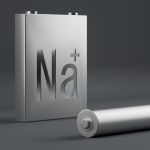
Source: interestingengineering
Author: Ameya Paleja
Published: 1/9/2026
To read the full content, please visit the original article.
Read original articleResearchers at Shanghai Jiao Tong University in China have developed a novel sodium-sulfur (Na-S) battery that significantly improves energy density and discharge capacity, offering a safer and more cost-effective alternative to lithium-ion batteries. Traditional lithium-ion batteries, while energy-dense, pose risks of thermal runaway and fire, and their increasing cost due to lithium scarcity has driven the search for alternatives. Sodium, being abundant and inexpensive, is a promising candidate, but previous Na-S batteries suffered from low voltage and required excessive sodium, limiting their practicality and efficiency.
The breakthrough came by switching the battery chemistry to S0/S4+ redox reactions and designing an anode-free battery using an aluminum foil anode current collector, an S8 cathode, and a sodium dicyanamide (NaDCA) electrolyte, which is non-flammable. This configuration improved sodium plating/stripping reversibility and unlocked higher voltage at the cathode. The battery achieved an energy density of 1,198 Wh/kg
Tags
energysodium-sulfur-batterybattery-technologyenergy-storagealternative-energyhigh-energy-densitymaterials-science