
Quantum dots fire photons 3x faster with new low-density design
Source: interestingengineering
Author: @IntEngineering
Published: 3/13/2026
To read the full content, please visit the original article.
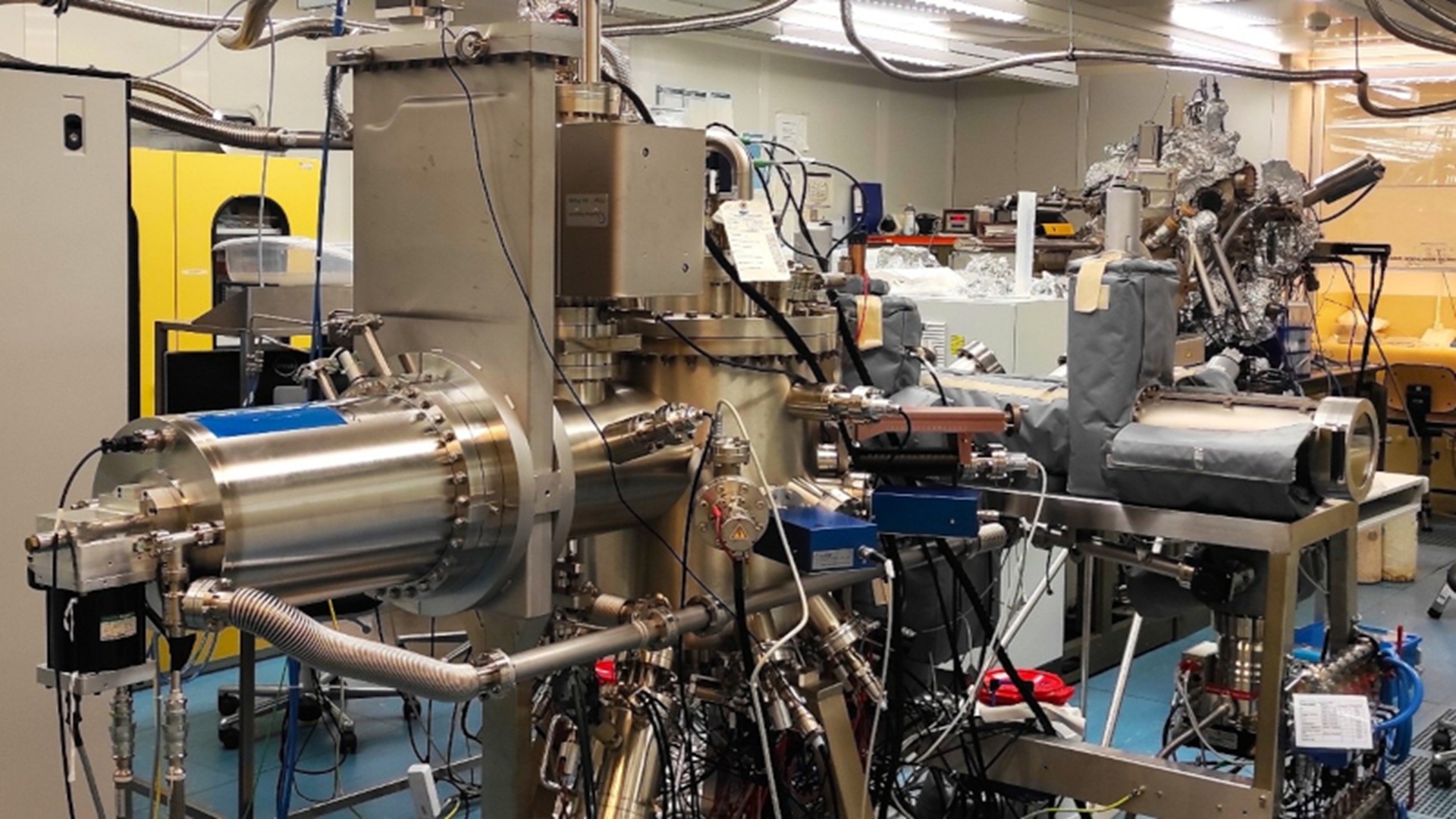
Read original articleScientists have developed a novel fabrication method for semiconductor quantum dots that significantly enhances their performance as single-photon emitters, with potential applications in quantum communication and photonic quantum computing. Traditional quantum dots, typically grown by the Stranski-Krastanov method, suffer from high density, structural irregularities, and slower photon emission times (~1 nanosecond), which complicate isolating single emitters and degrade performance. The new approach uses local droplet etching to create nanocavities on aluminum gallium arsenide (AlGaAs) surfaces, which are then filled with an ultra-thin (~1 nanometer) layer of indium gallium arsenide (InGaAs). This results in quantum dots with low surface density (~0.2-0.3 dots per square micrometer), high structural symmetry, reduced mechanical strain, and significantly faster photon emission, with radiative lifetimes around 300 picoseconds—about three times faster than conventional dots.
Additionally, the researchers demonstrated
Tags
quantum-dotssemiconductor-materialsphotonic-devicesindium-gallium-arsenidealuminum-gallium-arsenidenanotechnologyquantum-communication