
Robot learns adaptive walking on uneven terrain using deep learning
Source: interestingengineering
Author: @IntEngineering
Published: 1/16/2026
To read the full content, please visit the original article.
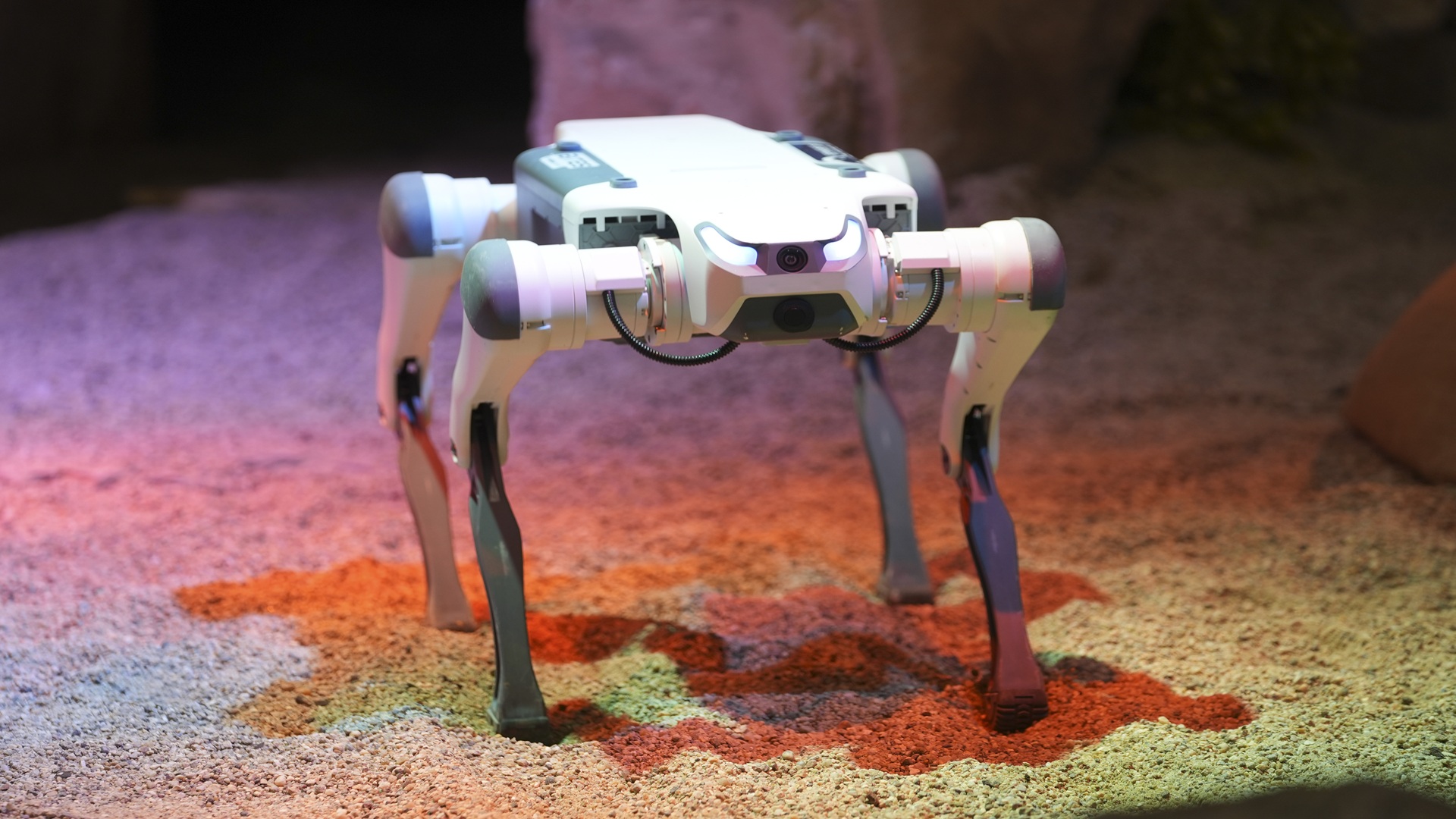
Read original articleThe article discusses a quadruped robot that has successfully learned to walk adaptively on slippery and uneven terrain solely through deep reinforcement learning in simulation, without relying on human-designed gaits or manual tuning. Traditional legged robot control methods depend on precise physical models and predefined motions, which often fail in unpredictable environments. To overcome these limitations, the researchers developed a structured training framework using a curriculum that gradually increases terrain difficulty—from flat ground to slopes, rough surfaces, low friction, and mixed conditions with sensor noise. This approach enables the robot to develop robust locomotion skills and adapt instinctively to new terrains.
The robot’s control system features a hierarchical structure with a high-level neural network policy generating joint targets at 10 Hz, executed by a low-level controller at 100 Hz for stability. It uses proprioceptive inputs (joint angles, velocities, body orientation) and exteroceptive data from a simulated depth camera to perceive terrain features. Training employed proximal policy optimization with a multi-objective reward balancing
Tags
roboticsdeep-learningadaptive-walkingreinforcement-learningquadruped-robotterrain-navigationrobotic-control-systems