
Robots made from food waste explore a new path for bio-material design
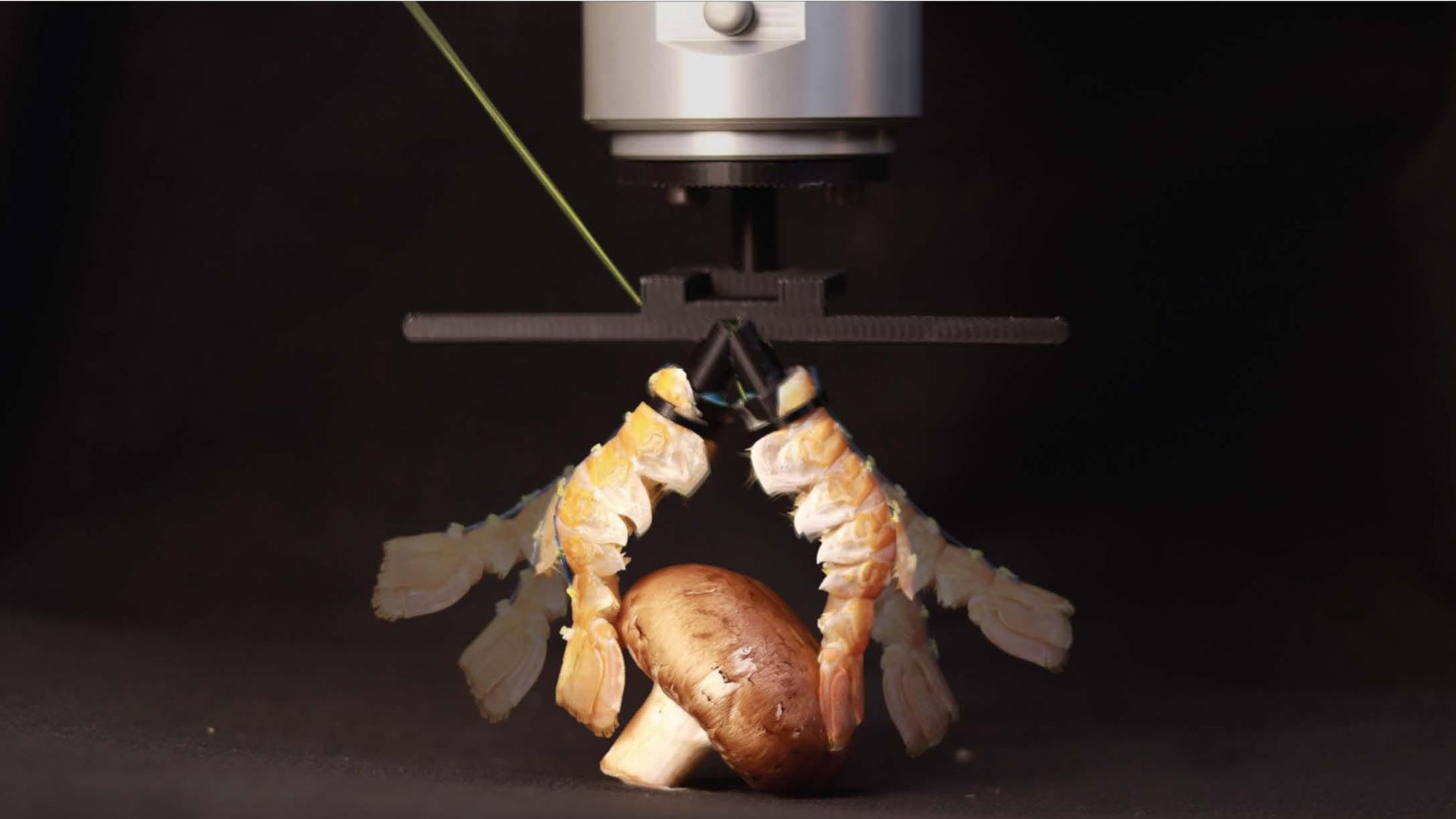
Source: interestingengineering
Author: @IntEngineering
Published: 12/5/2025
To read the full content, please visit the original article.
Read original articleResearchers at EPFL’s CREATE Lab have developed robotic components made from discarded langoustine exoskeletons, demonstrating a novel approach to sustainable robotics by repurposing food waste as functional bio-materials. This work introduces circular design principles into robotics, moving away from traditional synthetic materials like metals and plastics. The team embedded elastomer within the natural exoskeleton segments to control movement, coated them with silicone for durability, and mounted them on motorized bases. Their prototypes include a manipulator capable of lifting 500 grams, soft robotic grippers handling delicate and rigid objects, and a swimming robot propelled by exoskeletal fins reaching speeds of 11 cm/s. Importantly, most components can be recovered and reused, supporting sustainability goals.
The research highlights the mechanical advantages of natural structures, such as the balance of rigidity and flexibility found in crustacean exoskeletons, which enable rapid and precise movements. However, working with biological materials presents challenges due to variability in geometry and behavior between individual
Tags
roboticsbiomaterialssustainable-designcircular-economybio-inspired-robotsfood-waste-recyclingsoft-robotics