
Swiss nanodevice uses saltwater evaporation to produce electricity
Source: interestingengineering
Author: @IntEngineering
Published: 2/20/2026
To read the full content, please visit the original article.
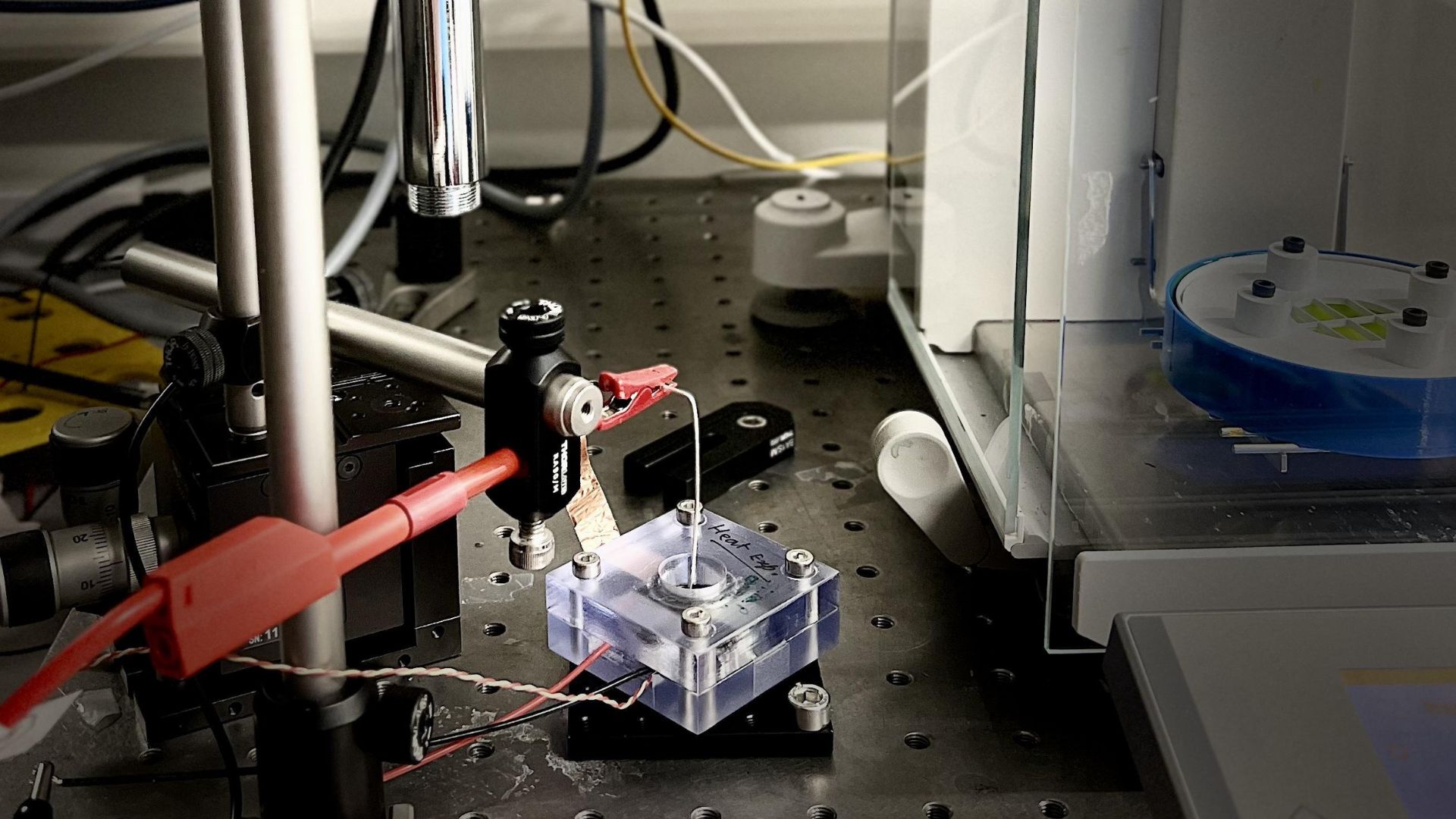
Read original articleResearchers at the Laboratory of Nanoscience for Energy Technology (LNET) at EPFL in Switzerland have developed a novel nanodevice that generates electricity by harnessing saltwater evaporation driven by both heat and light. Unlike traditional hydrovoltaic (HV) technologies that primarily use water movement, this device leverages the interaction of evaporating saltwater with silicon nanopillars to control ion and electron flows, producing a stable electric current. The device’s trilayer structure—comprising layers for evaporation, ion transport, and electrical charge collection—enables efficient charge separation at the solid-liquid interface, creating an electric field that drives electricity generation.
A key innovation is the dual role of heat and light: heat accelerates evaporation and enhances the device’s negative surface charge, while light excites electrons in the silicon semiconductor, together increasing energy output by a factor of five compared to previous designs. The device achieves a voltage of 1 V and a power density of 0.25 W/m².
Tags
energynanodevicehydrovoltaic-technologysaltwater-evaporationelectricity-generationsilicon-nanopillarsrenewable-energy