
Von optimistischen Modellen zu leeren Pipelines: Die intellektuelle Geschichte von Deutschlands Wasserstoff-Backbone* - CleanTechnica
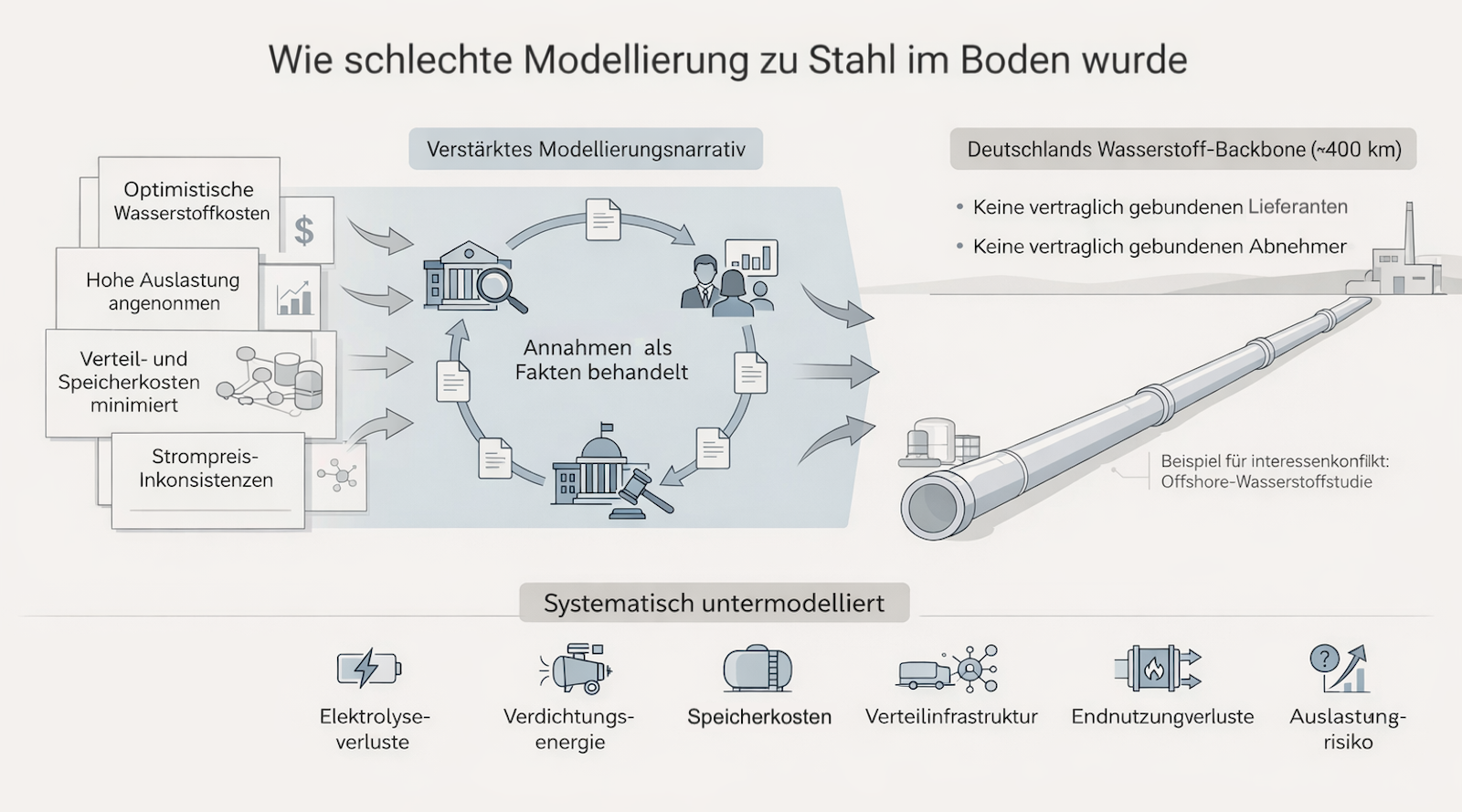
Source: cleantechnica
Author: @cleantechnica
Published: 2/3/2026
To read the full content, please visit the original article.
Read original articleThe article traces the intellectual history behind Germany's hydrogen backbone infrastructure, emphasizing that the physical pipeline network is the visible outcome of a long period of optimistic modeling and policy-driven assumptions rather than a straightforward technical project. For years, studies and analyses portrayed hydrogen as not only plausible but necessary for large-scale energy use, extending its traditional industrial roles into general energy applications. However, these studies systematically overlooked or downplayed the significant challenges and energy losses involved in hydrogen production, distribution, storage, and utilization, leading to overly positive cost and efficiency assumptions.
Key failures arose from stacking multiple optimistic assumptions—such as low electrolyzer investment costs, underestimated electricity prices, and simplified or omitted costs for compression, storage, and pipeline operation—without critical peer review. This created a distorted picture of hydrogen’s viability as a flexible energy carrier comparable to electricity. In reality, the energy conversion chain for hydrogen is marked by substantial losses, with often less than 30% of the original electrical energy reaching the end-use application. The normalization
Tags
energyhydrogenenergy-infrastructureenergy-storageenergy-lossesenergy-transportenergy-policy