
World’s tiniest light diodes shrink 100 times smaller than a human cell width
Source: interestingengineering
Author: Georgina Jedikovska
Published: 11/24/2025
To read the full content, please visit the original article.
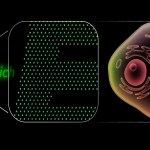
Read original articleSwiss researchers at ETH Zurich, led by Chih-Jen Shih, have developed organic nano-OLEDs that are approximately 100 times smaller than a human cell, with pixel diameters around 100 nanometers—about 50 times smaller than current state-of-the-art OLED pixels. Using a novel one-step fabrication process involving ultra-thin silicon-nitride membrane templates, the team achieved a pixel density roughly 2,500 times greater than before, reaching a theoretical resolution of about 50,000 pixels per inch. This breakthrough enables ultra-sharp displays for future wearables, near-eye devices, and advanced microscopes.
Because these nano-OLEDs are smaller than the wavelength of visible light, they can precisely control emitted light, allowing neighboring pixels’ light waves to interact through principles similar to phased-array optics. This capability could lead to new applications such as holographic displays, mini lasers, optical data transmission on chips, and sensitive biosensors detecting signals from single cells. The technology also
Tags
materialsorganic-light-emitting-diodesnano-OLEDsnano-scale-technologyadvanced-displaysphotonicsnano-fabrication